

Fabulous Food Plants
Little Sesame
All Roads Lead to Growth for hummus maker
From opening a fast-casual restaurant in D.C. to quintupling its CPG production capacity when its new Maryland facility becomes fully operational, Little Sesame is on a journey of creativity, inspiration and growth.
By Alyse Thompson-Richards
A joint venture by Migros, Givaudan and Bühler Group, The Cultured Hub aims to help startups and other companies in the cultured meat space reduce infrastructure costs. Image courtesy of The Cultured Hub
Little Sesame celebrates the opening of its new facility in Capitol Heights, Maryland with a ribbon-cutting ceremony. Image by Harry Ford/Little Sesame
Many food companies would describe their paths as a winding journey, but very few have actually traveled that path in a Volkswagen.
Nick Wiseman and Ronen Tenne, chefs and co-founders of Little Sesame, have. In their quest to spread “smooth hummus and sunny vibes,” the business partners have cruised the East and West Coasts in a 1970s Volkswagen camper, cooking for friends, meeting farmers and finding inspiration through their travels.
“The joy of the road is the discovery,” Wiseman says. “We’ve really tried to maintain that spirit as we’ve continued to build Little Sesame.”
The company, which started selling freshly-spun hummus in a 500-sq.-ft., D.C. basement, has since blossomed into a two-pronged business: a fast-casual restaurant with hummus as the star and CPG manufacturing supported by a new, 23,600-sq.-ft. facility in Capitol Heights, Maryland.
With the new plant, which began production in January, Little Sesame will quintuple its annual capacity from 4 million to 20 million lbs. once fully operational — all while preserving the culinary touches that make Little Sesame’s hummus special.
“It’s just been a really huge growth moment for us,” Wiseman says. “It does open up not only so much capacity but just breathing room for the brand. It is this whole new chapter for us of growth and excitement.”
Early Days
Wiseman and Tenne met while working on the line in fine dining restaurants in New York City. Tenne, who was known for “family meal” — the group meal a restaurant staff shares before a busy service — was especially skilled at crafting hummus.
“It just blew us all away,” Wiseman says. “It was so different than we were used to getting off grocery store shelves.”
Though Wiseman eventually moved back to Washington, D.C., they later reconvened to build a restaurant concept around hummus. Wiseman convinced Tenne to come to D.C. for a tahini tasting, and in 2016, Little Sesame was born.
The following year, Wiseman and Tenne traveled up the East Coast in the Volkswagen camper, taking the opportunity to learn and experience what they could before opening their restaurant.
But that wasn’t Little Sesame’s only trip — Wiseman and Tenne also traveled the West Coast in 2019. Last summer, they trekked across the country, making 100 stops between Portland, Maine and Seattle, Washington and giving out 70,000 samples throughout their journey.
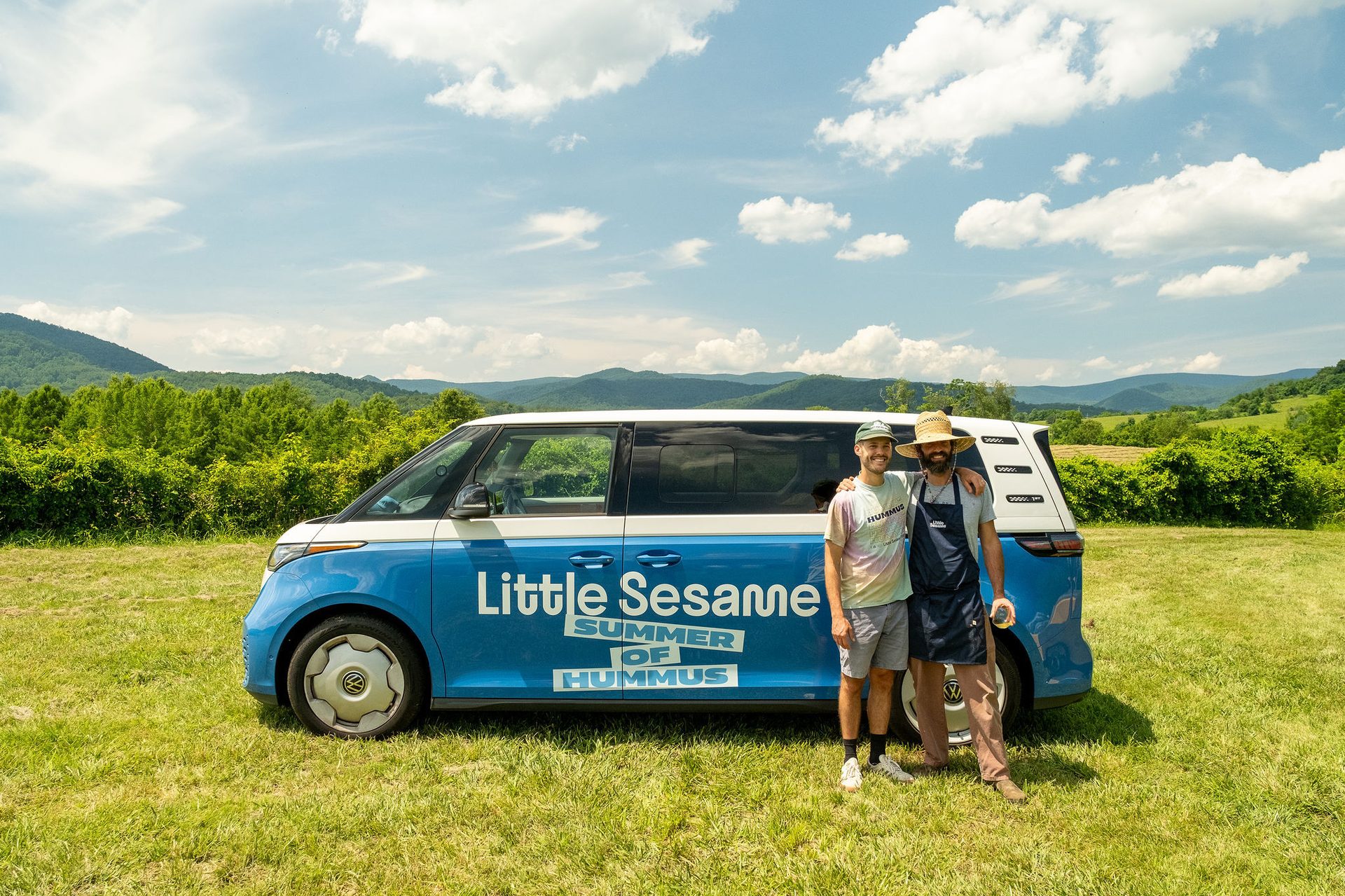
Little Sesame co-founders Nick Wiseman, left, and Ronen Tenne have traveled all over the country in a Volkswagen, including 2025’s Summer of Hummus, to gain inspiration for their hummus products. Photo courtesy of Little Sesame
“Part of the reason we both wanted to quit fine dining was to get out there in the world and break the rules that existed in that space,” Wiseman says. “I think so symbolic of that was the road tripping, cooking on the road and the VW.”
In 2018, Wiseman and Tenne opened Little Sesame’s flagship restaurant, offering salads, bowls and pitas with hummus made fresh daily. With a fast-casual concept like Cava or Sweetgreen, Little Sesame aims to bring fresh, high-quality food to more people.
“We could bring the same quality and intentionality of what we learned from our fine dining days but do it in a way that was approachable for everyday people,” Wiseman says. “We love the opportunity to be able to reach more folks and get that quality that was limited to fine dining to the masses.”
Expanding into Retail
Little Sesame was already selling hand-packed pints of hummus out of the restaurant when the COVID-19 pandemic struck in early 2020, providing a critical opportunity to pivot.
“When the pandemic hit and we were forced to really shift distribution strategy, we had a product that naturally translated,” Wiseman says. “We threw that hospitality spirit at the product and we’re like, ‘how can we elevate this to something that’s just different than what’s out there on shelf?’”
Fortunately, one of Little Sesame’s early customers was a Whole Foods forager dedicated to discovering local artisans. Little Sesame built a lab inside its restaurant, and alongside a team member versed in food science, Wiseman and Tenne developed a formulation that would work in retail. After a year of testing, Little Sesame hummus launched in 14 Mid-Atlantic Whole Foods locations in 2021.
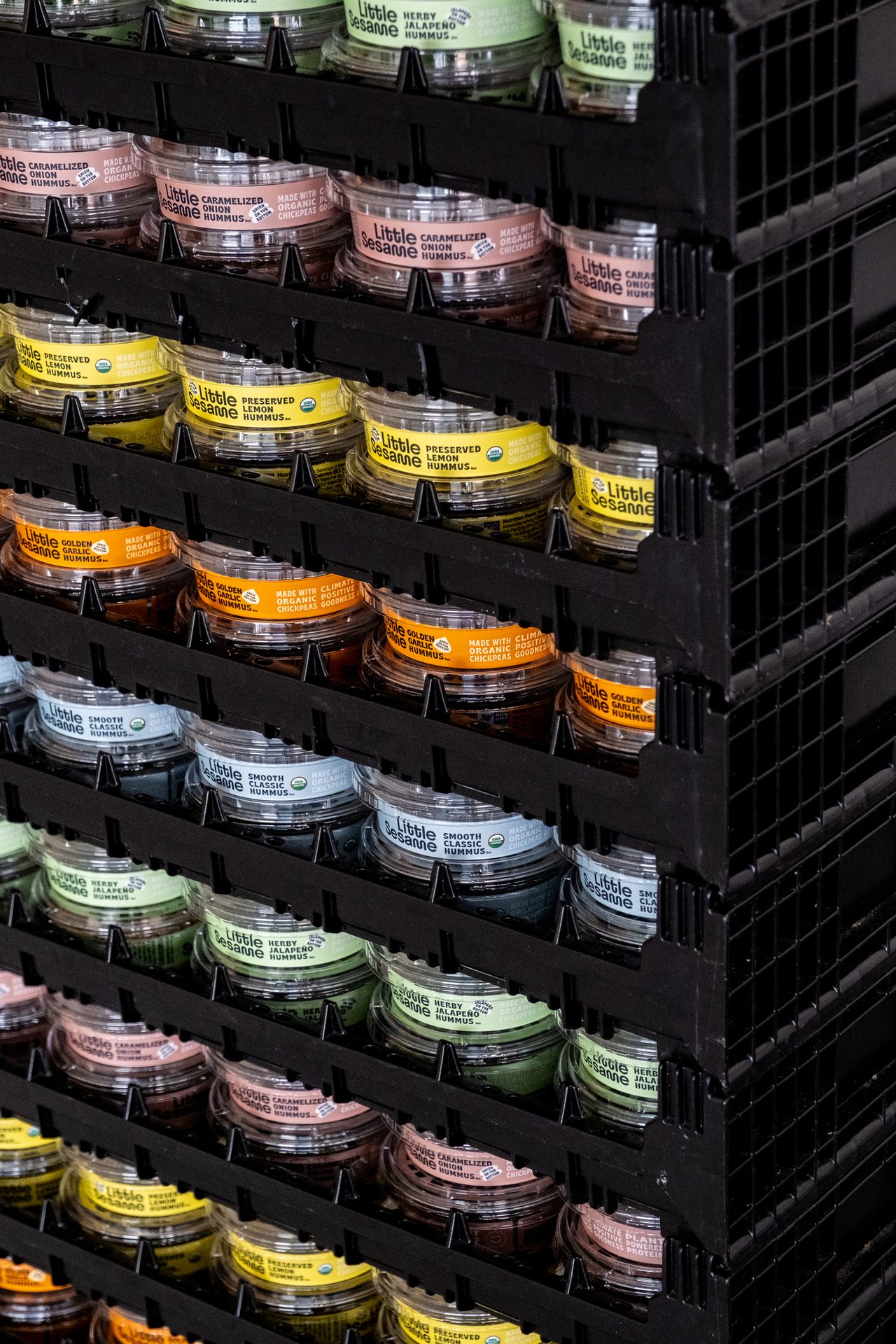
Little Sesame offers a variety of hummus flavors packaged for retail, including Caramelized Onion, Herby Jalapeño, Preserved Lemon and Golden Garlic. Image by Harry Ford/Little Sesame
at t“We were able to honor to really honor the exact recipe we built in the restaurant and still get the shelf life we needed to be able to work in CPG,” Wiseman says. “That was really the exciting discovery and it was a long, winding road.”
Little Sesame timing was also ideal as consumers increasingly demand organic and sustainable products. In addition to achieving organic and Clean Label Project certifications, Little Sesame sources regeneratively grown chickpeas from Montana that are free of glyphosate residue.
“There’s this great demand,” Wiseman says. “It wasn’t something that we planned or built in — it was just because we were trying to find the best quality product we could. It’s nice when those things pay dividends.”
Moving into Manufacturing
It didn’t take long for Little Sesame to outgrow the manufacturing space in its restaurant. Wiseman and Tenne scoured the country for a co-packer that could replicate their process, but none measured up.
“We just could not find a co-packer that would honor the process — soaking the chickpeas, juicing the lemons, picking the herbs,” Wiseman says. “So much of this culinary work that we were doing, we couldn’t find a co-packer that would do it.”
In 2022, Little Sesame moved into a 10,000-sq.-ft. facility in Prince George’s County, Maryland, where the company could produce 4 million lbs. of hummus annually. Wiseman says he and Tenne first learned the ropes of manufacturing and how their unique perspective fit at this facility.
“We like to say we have a culinary lens on manufacturing and it’s very different,” Wiseman says. “We’re not manufacturers first, we’re chefs first. We bring that approach to manufacturing and we’re learning as we grow to be better manufacturers.”
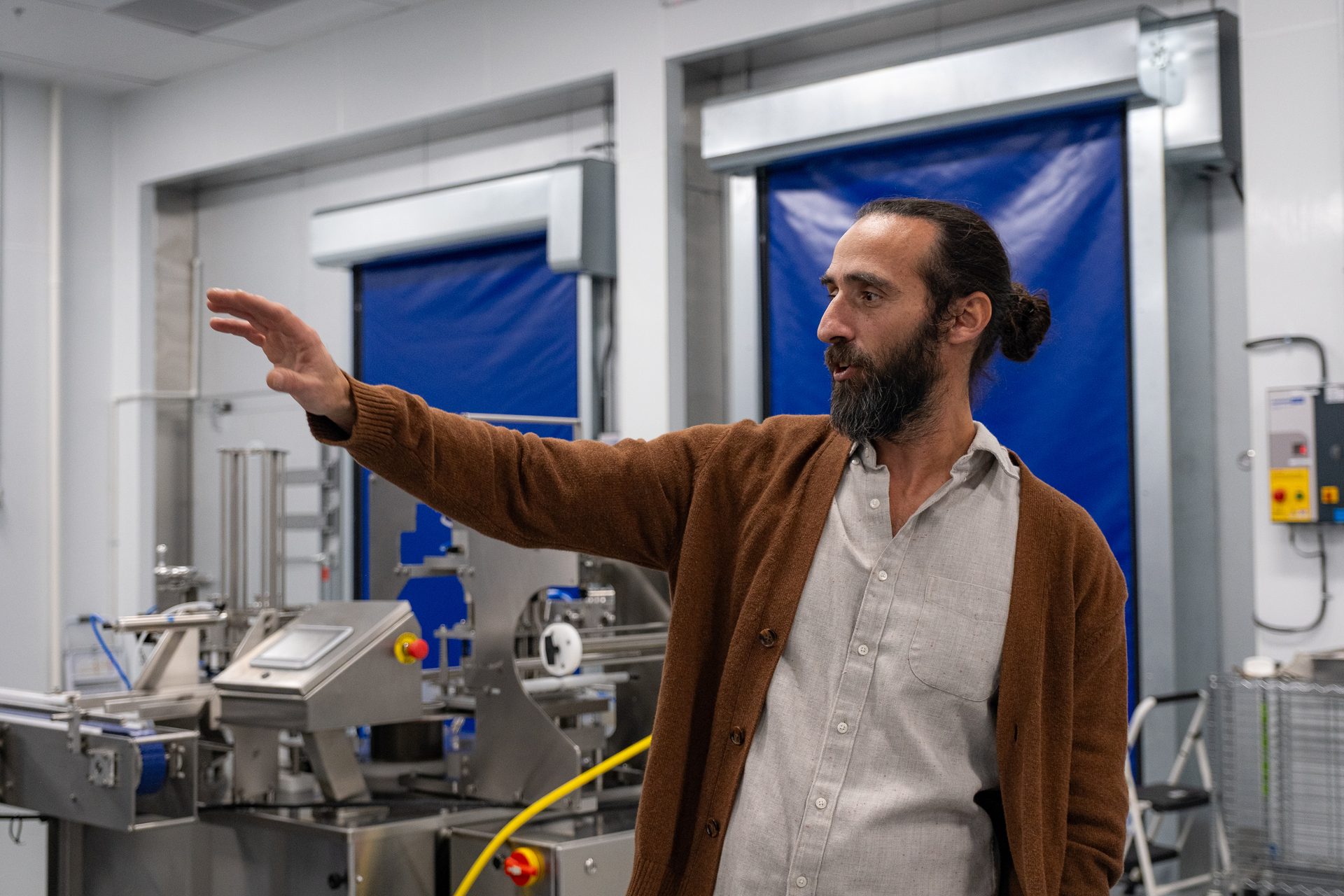
Little Sesame co-founder Ronen Tenne shows off the company’s new production facility in Capitol Heights, Maryland. The plant will allow the company to produce 20 million lbs. annually once it’s fully operational. Image by Harry Ford/Little Sesame
Now serving retailers such as Whole Foods, Sprouts, Target, Wegmans and Erewhon, among others, Little Sesame’s production needs grew again. Still, Wiseman and Tenne couldn’t find a co-packer that would work, so it was time to build from the ground up.
Last year, Little Sesame closed an $8.5 million round of Series A financing, led by InvestEco Capital. The funding supported building the new production facility in Capitol Heights, just a couple miles from Little Sesame’s previous location. Wiseman says this helped retain the company’s “loyal, dedicated” team.
In addition to office space for its growing staff, the new facility has an R&D kitchen designed with a chef’s touch, as well production space capable of running four lines simultaneously. Additionally, the facility will have in-house high pressure processing (HPP) capabilities.
“We understood the schematics of our facility and what we needed to do, so we built ourselves the perfect box to make Little Sesame hummus,” Wiseman says. “It’s been really nice. Obviously, when you fit yourself into a space, it’s very different than when you build yourself your own space. We think the quality of our products is going to continue to get better and better.”
Wiseman says Little Sesame has automated throughout the plant while protecting the parts where human touch improves the product, such as hand-picking herbs for its Herby Jalapeño Hummus.
“Those kind of culinary, high-touch moments are what we view really shapes the quality of the product,” he says. “Yes, we’ve also brought in automation because we want to be able to deliver that price on shelf that’s also of real value to the consumer.”
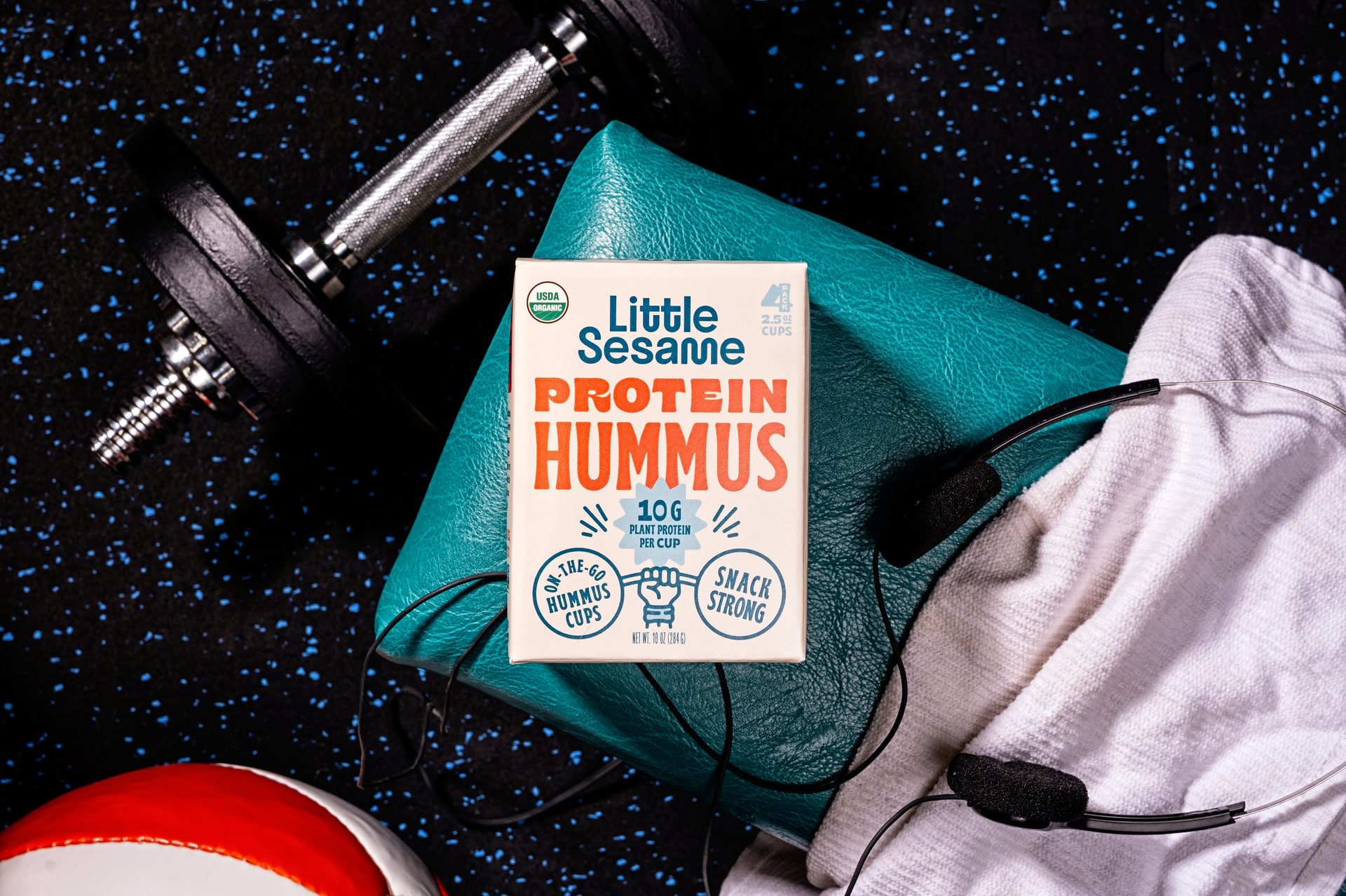
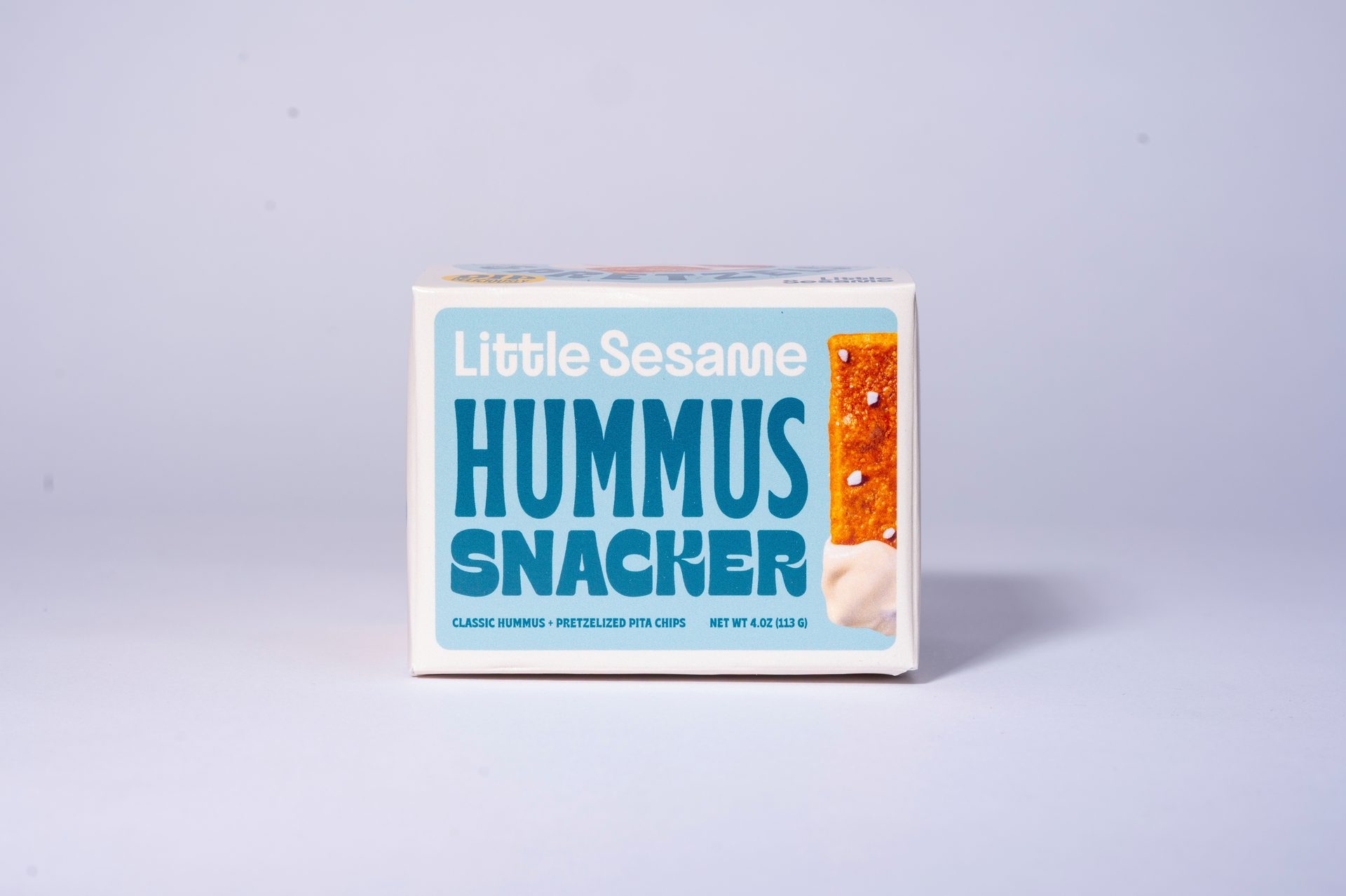
Little Sesame’s new facility allows Little Sesame to fully move into the ready-to-eat snacking category. The company has launched the Little Sesame Hummus Snacker and Little Sesame Protein Hummus. Photos courtesy of Little Sesame
The facility also allows Little Sesame to expand into a new category: ready-to-eat snacking. In April, the company launched two new products with Target — Little Sesame Hummus Snacker and Little Sesame Protein Hummus. The Hummus Snacker features a 4-oz. cup with “pretzelized” pita chips, while the Protein Hummus is packed in four, 2.5-oz. cups. Each cup features 10 grams of plant-based protein. Meanwhile, the company is expanding distribution of its Hummus for Kids offering, which also includes four, 2.5-oz. cups.
“The new facility was really for us the debut of this snacking world for Little Sesame,” Wiseman says. “We’re super excited about that, and it’s definitely a big unlock in this new building.” FE
next article